
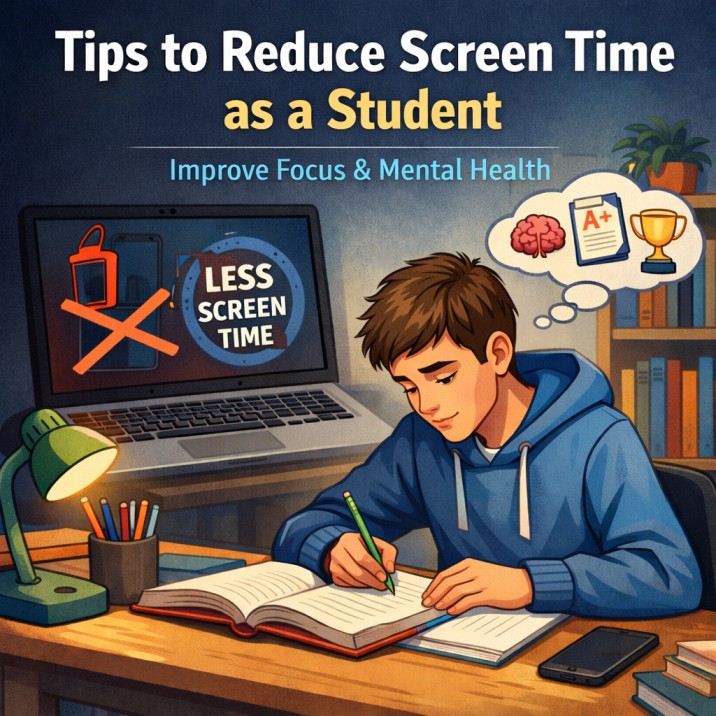
Reduce screen time as a student to improve focus, productivity, and mental wellbeing. In today’s digital world, students spend a significant amount of time using smartphones, laptops, and social media platforms. While technology is useful for studying and research, excessive screen usage can reduce concentration, affect sleep quality, and lower academic performance.
Learning how to reduce screen time as a student is essential for building healthier digital habits. When students limit unnecessary screen usage, they can improve productivity, develop stronger focus during study sessions, and maintain better mental health.
Why Students Should Reduce Screen Time
Many students unknowingly spend several hours each day scrolling through social media, watching videos, or browsing entertainment websites. Excessive screen exposure can lead to eye strain, poor sleep patterns, and reduced academic productivity.
If you want to understand the impact of excessive screen usage, read our guide on
screen time and mental health. Understanding how digital habits affect the brain can help students take the first step to reduce screen time as a student.
By making small changes to daily routines, students can successfully reduce screen time and improve their study performance.
1. Track Your Screen Usage
The first step to reduce screen time as a student is understanding how much time you actually spend on your devices. Most smartphones and operating systems provide built-in screen time tracking features.
These reports show which apps consume the most time, helping students identify where their attention is being wasted.
2. Set Daily Screen Time Limits
Setting daily limits for social media apps and entertainment platforms is another effective way to reduce screen time as a student.
Most devices allow users to restrict specific apps once the daily limit is reached, encouraging students to focus on more productive tasks.
3. Disable Unnecessary Notifications
Notifications constantly interrupt study sessions and encourage students to check their phones repeatedly. Turning off unnecessary notifications can significantly help students reduce screen time.
This small change helps maintain concentration during important study periods.
4. Schedule Screen-Free Study Sessions
Students who want to reduce screen time as a student should schedule dedicated study sessions without social media or entertainment websites.
For example, keeping phones away while studying for 45–60 minutes can greatly improve concentration and productivity.
5. Take Regular Digital Breaks
Taking breaks away from screens is important for both mental and physical health. Long periods of screen exposure can cause eye strain and mental fatigue.
During breaks, students can stretch, walk around, or relax their eyes to refresh their focus.
6. Limit Social Media Scrolling
Social media platforms are one of the biggest reasons students struggle to reduce screen time as a student.
If social media is consuming too much time, consider taking a temporary break. Our guide on
how to take a social media break explains practical strategies to regain control over your digital habits.
7. Try a Social Media Detox
A social media detox is one of the most effective strategies to reduce screen time as a student. It involves temporarily avoiding social platforms to reset your digital habits.
If you want to try this method, read our article on
social media detox, which explains how taking breaks from social media can improve productivity and mental clarity.
8. Replace Screen Time With Productive Activities
Instead of spending hours scrolling on your phone, replace that time with healthier and more productive activities such as:
- Reading books
- Practicing new skills
- Exercising or walking
- Studying offline materials
Replacing digital distractions with productive habits helps students reduce screen time naturally.
9. Avoid Screens Before Sleep
Using smartphones or laptops before bedtime affects sleep quality because blue light interferes with melatonin production.
According to research from the
Sleep Foundation, limiting screen exposure before bed significantly improves sleep quality.
10. Use Website Blockers to Control Screen Usage
Website blockers and productivity tools help students reduce screen time as a student by restricting access to distracting websites.
These tools prevent endless scrolling on social media and entertainment platforms, allowing students to focus on studying.
Common Signs Students Need to Reduce Screen Time
Many students do not realize how much time they spend on their devices until it begins to affect their daily routines. Recognizing the warning signs early can help students take steps to reduce screen time as a student and build healthier digital habits.
Some common signs that students may need to reduce screen time include:
- Difficulty concentrating during study sessions
- Frequently checking social media while studying
- Feeling tired due to late-night phone usage
- Eye strain or headaches after long screen exposure
- Procrastinating on assignments because of digital distractions
If students notice these signs regularly, it may be time to actively work on strategies to reduce screen time and regain focus.
Benefits of Reducing Screen Time for Students
When students successfully reduce screen time as a student, they often experience several positive improvements in both academic performance and personal wellbeing.
Some of the key benefits include:
- Improved concentration: Fewer digital distractions allow students to focus better on studying.
- Better sleep quality: Limiting screen exposure before bed helps regulate sleep cycles.
- Higher productivity: Students can complete tasks faster without constant interruptions.
- Better mental health: Reduced social media usage lowers stress and anxiety.
- More free time: Students can spend time on hobbies, exercise, and personal growth.
Developing these habits early helps students maintain a balanced lifestyle while still benefiting from technology.
How Parents and Teachers Can Help Students Reduce Screen Time
Parents and teachers also play an important role in helping students develop healthier digital habits. Encouraging responsible technology use can make it easier for students to reduce screen time as a student and stay focused on their goals.
Some helpful strategies include:
- Encouraging screen-free study environments
- Setting boundaries for device usage at home
- Promoting offline learning activities
- Educating students about digital wellbeing
By creating supportive environments, both educators and parents can help students maintain a healthy balance between technology and real-life activities.
Practical Daily Habits to Reduce Screen Time as a Student
Reducing screen time does not require drastic lifestyle changes. Small daily habits can help students gradually reduce screen usage and develop healthier digital routines.
Students who want to reduce screen time as a student can start with simple habits that encourage mindful technology usage. These habits make it easier to stay focused on studies while still using technology when necessary.
- Keep your phone away from your study desk while studying.
- Use airplane mode during deep study sessions.
- Avoid opening social media apps during short study breaks.
- Schedule specific times during the day for checking messages.
- Use productivity apps that block distracting websites.
By consistently practicing these habits, students can gradually reduce unnecessary screen exposure and improve their focus.
The Long-Term Impact of Excessive Screen Time
Spending too much time on digital devices can have long-term effects on students’ physical and mental wellbeing. Research suggests that excessive screen time may contribute to sleep disturbances, reduced attention span, and increased stress levels.
Students who actively work to reduce screen time as a student often notice improvements in their daily routines. They tend to feel more energized, focused, and motivated to complete their academic tasks.
Over time, limiting screen exposure can also improve time management skills. When students spend less time on digital distractions, they gain more time for learning, personal development, and offline activities.
Balancing Technology and Productivity
Technology is not inherently harmful. In fact, digital tools play an important role in modern education. The goal is not to completely eliminate screen usage but to create a healthy balance between technology and productivity.
Students who successfully reduce screen time as a student focus on using technology intentionally. Instead of mindlessly scrolling through social media, they prioritize using digital devices for studying, research, and learning new skills.
Creating this balance helps students benefit from technology without allowing it to become a distraction.
Building Healthy Digital Habits for the Future
Learning how to manage screen time during student life is an important skill that will remain valuable in the future. In a world where digital devices are everywhere, developing healthy technology habits can improve both productivity and mental wellbeing.
Students who learn to reduce screen time as a student build stronger discipline, better focus, and healthier relationships with technology. These skills will continue to benefit them in their careers, professional life, and personal development.
By making small adjustments to daily habits and staying mindful of digital distractions, students can maintain a healthy balance between online activities and real-world experiences.
Why It Is Important to Reduce Screen Time as a Student
In the modern digital era, students rely heavily on smartphones, tablets, and laptops for both learning and entertainment. While technology provides valuable educational resources, excessive device usage can easily become a distraction.
This is why it is important to reduce screen time as a student. When students limit unnecessary screen usage, they can concentrate better on academic work, manage their time more effectively, and maintain healthier digital habits.
Reducing screen time allows students to focus on activities that contribute to long-term success, such as studying, skill development, reading, and creative hobbies.
How Screen Time Affects Student Productivity
Too much screen exposure can negatively affect student productivity. Constant notifications, social media updates, and online entertainment platforms create continuous distractions.
Students who struggle to reduce screen time as a student may find it difficult to maintain focus during study sessions. Even short interruptions can break concentration and slow down learning progress.
When students actively reduce screen time, they are able to concentrate for longer periods and complete their tasks more efficiently.
Creating a Healthy Digital Routine
Building a healthy digital routine helps students balance technology use with productive activities. Instead of eliminating technology completely, the goal should be to use devices intentionally.
Students who want to reduce screen time as a student can start by creating a structured daily routine. For example:
- Study for fixed periods without checking your phone.
- Schedule specific times for social media usage.
- Use digital tools only when necessary for academic tasks.
- Spend more time on offline learning activities.
This approach allows students to benefit from technology while avoiding unnecessary distractions.
Simple Lifestyle Changes That Reduce Screen Time
Sometimes the easiest way to reduce screen time is by making small lifestyle adjustments. These changes can significantly reduce the urge to constantly check devices.
- Keep your phone in another room while studying.
- Use a traditional alarm clock instead of your phone.
- Replace late-night scrolling with reading books.
- Spend time outdoors or exercise regularly.
When students adopt these habits, it becomes much easier to reduce screen time as a student and focus on activities that support personal growth.
The Role of Self-Discipline in Reducing Screen Time
One of the most important factors in managing digital habits is self-discipline. Students who develop strong self-control are better able to resist digital distractions.
Learning to reduce screen time as a student requires awareness and consistent effort. Over time, students become more mindful of how they use technology and begin prioritizing tasks that support their academic goals.
Developing this discipline early can greatly benefit students throughout their education and professional careers.
Frequently Asked Questions
Why should students reduce screen time?
Students should reduce screen time because excessive device usage can reduce focus, disrupt sleep, and negatively impact mental health.
How many hours of screen time is healthy for students?
Experts generally recommend limiting recreational screen time to around two hours per day while prioritizing educational activities.
How can students reduce screen time easily?
Students can reduce screen time by setting app limits, disabling notifications, and taking breaks from social media.
Does reducing screen time improve productivity?
Yes. Reducing screen time eliminates distractions and helps students focus more effectively on academic tasks.
Conclusion
Learning how to reduce screen time as a student is essential for improving productivity, maintaining better mental health, and achieving academic success.
By tracking screen usage, limiting social media, scheduling screen-free study sessions, and practicing digital detox strategies, students can develop healthier digital habits and regain control over their time.
When students successfully reduce screen time, they create more opportunities for learning, personal development, and meaningful offline activities.