
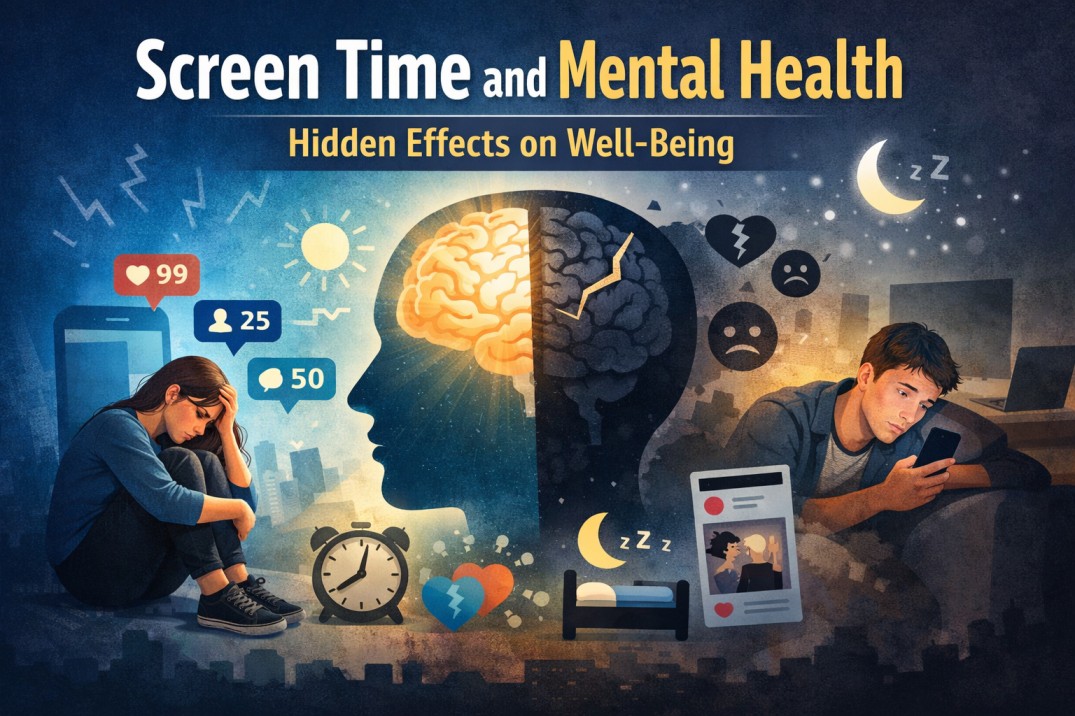
Screen time and mental health are closely connected in today’s digital world. From smartphones and laptops to tablets and TVs, screens dominate nearly every part of our daily lives. While technology has made communication and productivity easier, excessive screen use has quietly become one of the most serious threats to mental well-being.
Research shows that the average person now spends nearly 7–9 hours every day looking at screens. Social media, entertainment platforms, and digital work environments constantly compete for our attention.
This growing dependence on digital devices raises an important question: How does screen time affect mental health?
Understanding the relationship between screen time and mental health is essential for building healthier digital habits and protecting long-term well-being.
How Screen Time and Mental Health Are Connected
The connection between screen time and mental health has been widely studied by psychologists and health researchers.
Many digital platforms are designed to maximize engagement through features like infinite scrolling, autoplay videos, and push notifications. These features trigger dopamine responses in the brain, creating a reward loop that encourages repeated usage.
Over time, excessive digital stimulation can contribute to several mental health challenges, including:
- Reduced attention span
- Higher anxiety levels
- Sleep disturbances
- Lower productivity
- Increased social isolation
If you feel overwhelmed by social media usage, taking a break can help reset your habits. Our detailed guide explains practical strategies for disconnecting from social media in a healthy way.
Learn how to take a healthy social media break
7 Hidden Effects of Screen Time on Mental Health
1. Increased Anxiety and Stress
Constant notifications, messages, and updates keep the brain in a state of continuous alertness.
This pressure to stay connected often leads to anxiety and mental fatigue. The fear of missing out (FOMO) also contributes to the negative effects of screen time and mental health.
2. Sleep Disruption
One of the most harmful consequences of excessive screen use is poor sleep quality.
Digital screens emit blue light, which interferes with melatonin production — the hormone responsible for regulating sleep cycles.
- Difficulty falling asleep
- Interrupted sleep cycles
- Reduced energy the next day
Over time, poor sleep significantly affects mood, memory, and cognitive performance.
3. Reduced Focus and Productivity
Frequent notifications interrupt concentration and make deep work difficult.
Even short digital interruptions can significantly reduce productivity and increase task completion time.
4. Increased Risk of Depression
Social media platforms often display idealized versions of people’s lives. Constant exposure to curated content can lead to unhealthy comparisons.
This comparison culture negatively impacts screen time and mental health, contributing to low self-esteem and depressive feelings.
5. Digital Burnout
Spending too much time online can result in emotional exhaustion known as digital burnout.
People experiencing digital burnout often report fatigue, irritability, and reduced motivation.
6. Reduced Real-World Social Interaction
When digital communication replaces face-to-face interaction, meaningful relationships may weaken.
Healthy human connection plays an essential role in emotional stability.
7. Loss of Mindfulness
Endless scrolling prevents people from being present in the moment.
Mindless digital consumption reduces awareness and overall life satisfaction.
Many people restore balance by trying a digital detox. Our guide explains how stepping away from social media can improve focus and mental clarity.
Read the complete social media detox guide
The Importance of Digital Mindfulness
Improving screen time and mental health does not mean eliminating technology completely.
Instead, the goal is to practice digital mindfulness — using technology intentionally rather than automatically.
Healthy digital habits include:
- Setting daily screen time limits
- Turning off unnecessary notifications
- Creating phone-free time periods
- Avoiding screens before bedtime
However, maintaining these habits consistently can be challenging without the right support.
How ZenScroll Helps Improve Screen Time and Mental Health
Digital wellness tools can make it easier to build healthier screen habits.
ZenScroll helps users become more aware of their scrolling patterns and encourages mindful technology usage.
ZenScroll helps users:
- Reduce endless scrolling habits
- Improve focus and productivity
- Minimize digital distractions
- Develop healthier screen routines
By gradually changing digital behavior, users can restore balance between technology use and real-life experiences.
Practical Ways to Reduce Screen Time
Create No-Phone Zones
Keep devices away from bedrooms and dining tables to encourage healthier routines.
Schedule Digital Breaks
Follow the 20-20-20 rule: every 20 minutes, look at something 20 feet away for 20 seconds.
Use Digital Wellness Tools
Tools like ZenScroll can help track usage and reduce mindless scrolling.
Replace Screen Time with Real Activities
Reading, exercising, journaling, or spending time outdoors can greatly improve mental well-being.
The Future of Digital Well-Being
Technology will continue to evolve, but awareness about screen time and mental health is becoming increasingly important.
By understanding how digital habits influence our minds, we can create a healthier balance between online and offline life.
Frequently Asked Questions
How does screen time affect mental health?
Excessive screen time can increase stress, anxiety, and depression while reducing focus and disrupting sleep cycles.
How many hours of screen time is healthy?
Experts suggest limiting recreational screen time to around 2–3 hours per day for better mental health.
Can reducing screen time improve mental health?
Yes. Reducing screen time can improve sleep quality, increase productivity, reduce anxiety, and improve overall well-being.
What are effective ways to reduce screen addiction?
Setting screen limits, turning off notifications, practicing digital detox, and using productivity tools can help reduce screen dependency.
What is digital mindfulness?
Digital mindfulness means using technology intentionally and maintaining a healthy balance between digital and real-world experiences.
Conclusion
Excessive screen usage has a powerful impact on screen time and mental health. From anxiety and sleep disruption to reduced focus and productivity, the hidden consequences are deeper than most people realize.
The good news is that small changes can create meaningful improvements.
By practicing digital mindfulness and using supportive tools like ZenScroll, you can regain control of your attention, productivity, and mental well-being.